
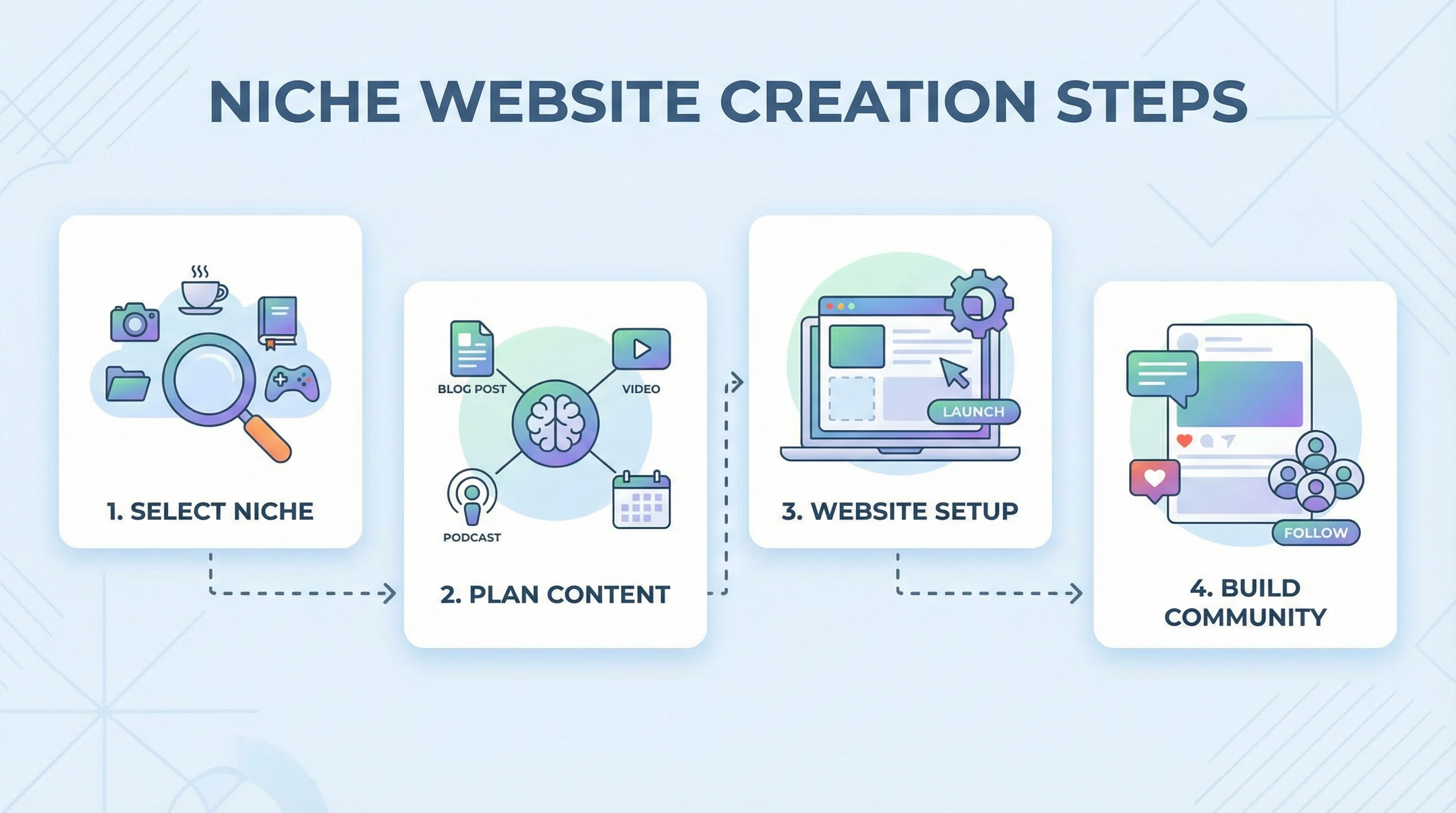
 A niche website focuses on a specific topic, audience, or market. I’ve found that building this kind of site gives you the chance to stand out online, whether you’re looking to turn your passion into income, capture leads for a business, or simply enjoy sharing your expertise. While it can seem a little overwhelming at first, breaking down the process makes it way more manageable.
Trying to publish a website for everyone usually falls flat and gets lost in the sea of competition. When you narrow into a clear niche, you can create content and resources that really matter to a particular group. That’s what brings loyal readers, higher engagement, and, if you’re after it, better earning potential.
There’s a lot more to making a successful niche site than just starting a blog. You’ll want to pick your topic carefully, set up your website the right way, and plan for content and growth. Here’s how I go about niche website development, step by step.
Step 1: Choose the Right Niche
Picking a niche isn’t always straightforward. It’s a mix of what interests you, what you know, and what people search for online. I recommend spending some time really thinking about it before jumping in.
Things to think about:
- What are your personal hobbies, skills, or experiences?
- Is there a specific problem you can solve or a question you can answer?
- How crowded is the market? Can you offer a unique angle?
- Are people searching for this topic online? Tools like Google Trends are pretty handy here.
Niche Examples:
- Urban gardening for small apartments
- Keto meal planning for busy parents
- Tech gadgets for digital nomads
- Budget travel guides for students
The more focused the topic, the easier it becomes to connect with your audience. Careful research helps you find a niche that isn’t too broad or too narrow. If you notice growing activity on social media groups, YouTube channels, and trending conversations for your chosen niche, that’s another green flag for strong potential. Don’t hesitate to join these communities to get a feel for their needs and challenges.
Step 2: Check Your Niche’s Potential
I always check if a niche is worth investing time and effort. This means making sure there’s enough interest and income possibilities.
How to check a niche:
- Look for search engine volume using tools like Ahrefs, SEMrush, or Google Keyword Planner.
- Analyze competitors; see what kind of content they share and how engaged their audiences are.
- See if there are affiliate programs, advertising opportunities, or products you could promote.
If the niche already has community forums, social groups, or active blogs, that’s usually a good sign that people are interested. Check Facebook Groups, niche subreddits, and relevant podcasts—they can clue you in on demand and help you spot any gaps that you could fill.
Step 3: Set Up Your Website Platform
Once you have your niche, it’s time to pick your website platform and hosting. WordPress is my go-to because it’s easy to customize, loads of plugins are available, and there’s good support online.
Simple steps for set up:
- Register a domain name that fits your niche. Keep it short and easy to remember.
- Choose reliable hosting; look for uptime, speed, and support.
- Install your platform (like WordPress), and pick a theme that looks clean and professional.
Set up basic pages right away: Home, About, Contact, and Privacy Policy. A simple, clear structure helps visitors feel comfortable and want to stick around. As you gain traction, you might want to add helpful features like a FAQ section, resource library, or engaging visuals to keep readers interested and make navigation smooth.
Step 4: Plan and Create Targeted Content
Good content is what turns a niche site into a go-to resource. I suggest thinking ahead about the questions your audience would ask, and then planning articles, guides, or reviews to answer them.
Content ideas to cover:
- How-to guides addressing common problems
- Product reviews with honest pros and cons
- Lists and resource roundups
- Case studies or firsthand stories
- Comparison posts to help visitors make decisions
- Beginner introductions or expert tips, depending on audience interest
Use keyword research tools to find the phrases people use. Naturally work these keywords into titles and content, while keeping the writing easy to read and helpful. That gets you noticed by both search engines and real people. Pictures, infographics, and videos can make your content more eye-catching and easy to understand, making it more likely people will stay, share, and come back.
Step 5: Optimize for SEO (Search Engine Optimization)
SEO brings free, targeted traffic over time. I always start with on-page optimization; think headings, meta descriptions, internal links, and image alt text. Off-page strategies, like getting high-quality backlinks and building relationships, can help your site build authority over time as well.
Handy SEO tasks:
- Each article should target a unique topic or keyword.
- Add proper headings (H1, H2, H3) for structure.
- Link related articles on your own site to help visitors and boost SEO.
- Optimize page speed with image compression and a light theme.
- Add a sitemap and submit it to Google Search Console for quicker indexing.
- Use schema markup when possible to highlight important info for search engines.
Building backlinks from other quality sites in your niche is also super important as you go, but at first, focus on solid content and page setup. Remember, SEO takes a little time, and consistency pays off.
Step 6: Build Community and Reach
Getting eyes on your site means spreading the word beyond SEO. I’ve found that sharing on social media, in forums, and through an email list really helps.
Ways to grow your audience:
- Answer questions on places like Reddit, Quora, or specialized forums and link back to helpful resources on your site.
- Start a simple newsletter; regular updates keep people coming back.
- Connect with other bloggers for guest posting or sharing each other’s work.
- Host giveaways or challenges in your community to encourage sharing and feedback.
- Share your stories and insights on platforms like Facebook, Instagram, or Pinterest to reach different audience groups.
Genuine involvement is what creates trust. When readers feel included, they’re more likely to return, subscribe, and even share your site with others. Respond to comments, run polls, and ask for feedback to show you value your audience’s input.
Step 7: Monetize Your Niche Website
If you’re looking to earn from your site, there are quite a few approaches—ads, affiliate marketing, product sales, or offering services.
Popular monetization methods:
- Affiliate links to products or courses that fit your niche.
- Google AdSense or other ad networks; works best with higher traffic.
- Ebooks, digital downloads, or online workshops.
- Sponsored posts or collaborations if you get enough traffic and credibility.
- Membership areas or premium content for exclusive access.
Focus on value and honesty, as people can spot when they’re being sold to. I always recommend promoting only what you believe in and what fits your niche community. Over time, tracking which methods bring in the most revenue can help you double down on what works best and keep your readers happy.
Common Questions & Troubleshooting
How much content do I need to launch?
Starting with 5–10 helpful, well-researched articles is plenty. It gives visitors something to explore, and lets you see what topics catch interest. As you grow, aim to add new posts regularly to keep things fresh.
How long does it take to see results?
It depends on your niche, SEO, and how often you publish. For most, traffic starts picking up steadily in 3–6 months, but it can be quicker with the right outreach. Don’t be discouraged if growth feels slow at first; consistency is more important than speed.
What if my niche isn’t working?
- Look for feedback; are people searching for your topics?
- Try pivoting the angle or focusing on a subniche.
- Keep testing new content ideas and promoting in new communities.
- Check your analytics to spot high-performing pages and patterns.
It’s totally normal to tweak your approach as you learn more about what your audience wants. Sometimes, a slight change in direction is all you need to get results. Be open to experimentation and learning along the way.
Your Next Steps in Niche Website Development
Niche website development isn’t about being the biggest site out there; it’s about being the most helpful for a specific group. When you choose a focused topic, build solid content, and create a welcoming space, real growth will follow. Remember, the internet is massive, but there’s always room for new voices with unique perspectives.
Action Steps:
- Pick a niche you care about and check that people search for it.
- Set up a clean, easy to use website with a handful of articles.
- Share your work and get involved with your target audience regularly; reply to emails and engage in conversations.
- Keep learning about your niche and updating your content to stay relevant and authoritative.
If you have a unique niche idea or want feedback on your concept, I’d love to hear about it in the comments! Your insights could help other readers who are ready to begin their niche website adventure as well.